

Three officially ratified world records, a legendary medal, a documentary premiered in Yverdon and Paris, and an institutional partner renewing its trust in us. October was a particularly momentous month in the SolarStratos adventure.
15 October: three world records officially ratified
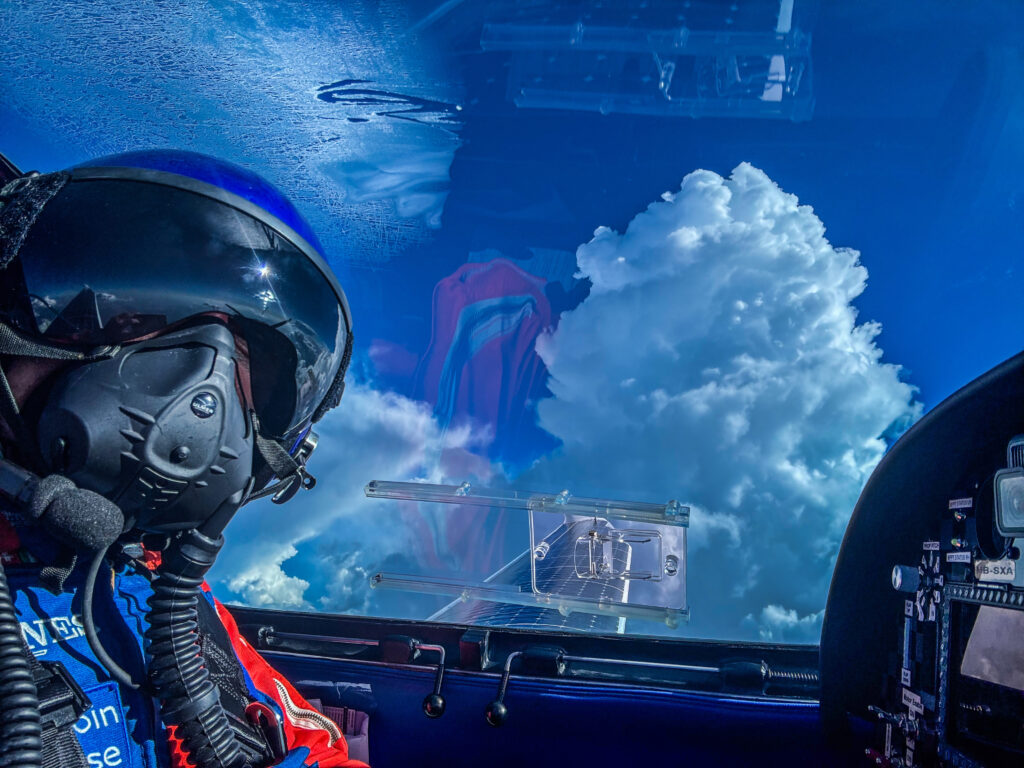
9,640 metres. That is the altitude to which Raphaël Domjan flew SolarStratos on 12 August 2025, taking off from Sion Airport. After several months of meticulous verification, the Fédération Aéronautique Internationale (FAI) has officially ratified three records:
1. Altitude in the solar-powered aeroplane category
2. Altitude gain in the same category
3. Altitude in an electric aeroplane, class C-1b*
Along the way, SolarStratos surpassed the 9,235 metres reached by Solar Impulse in 2010, until now the benchmark for a crewed solar aircraft.
* In the Fédération Aéronautique Internationale’s classification, class C-1b covers electric-powered aeroplanes with a maximum take-off weight not exceeding 1,000 kg. With an empty weight of 450 kg, SolarStratos falls squarely within this category.
14 October: the Louis Blériot Medal
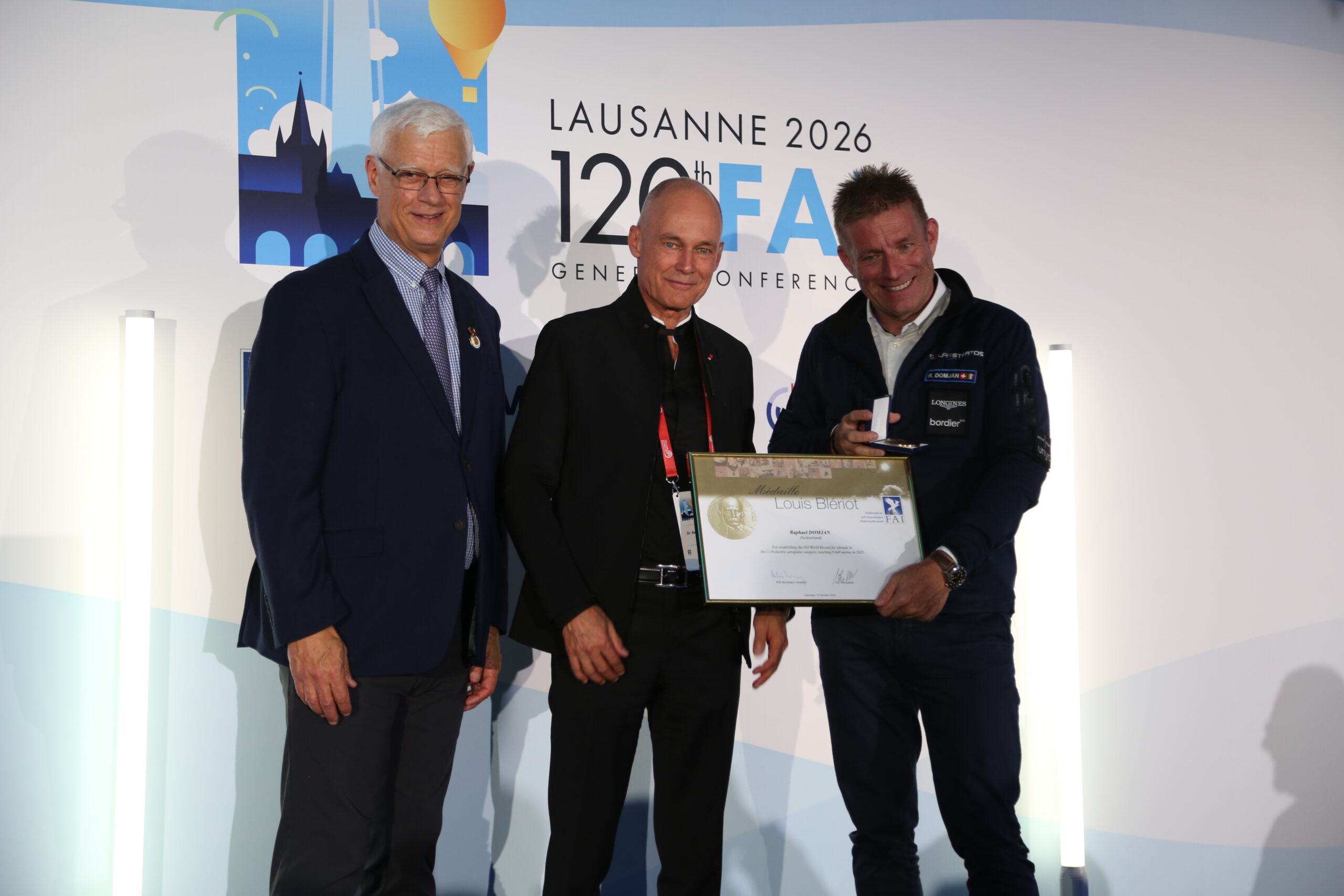
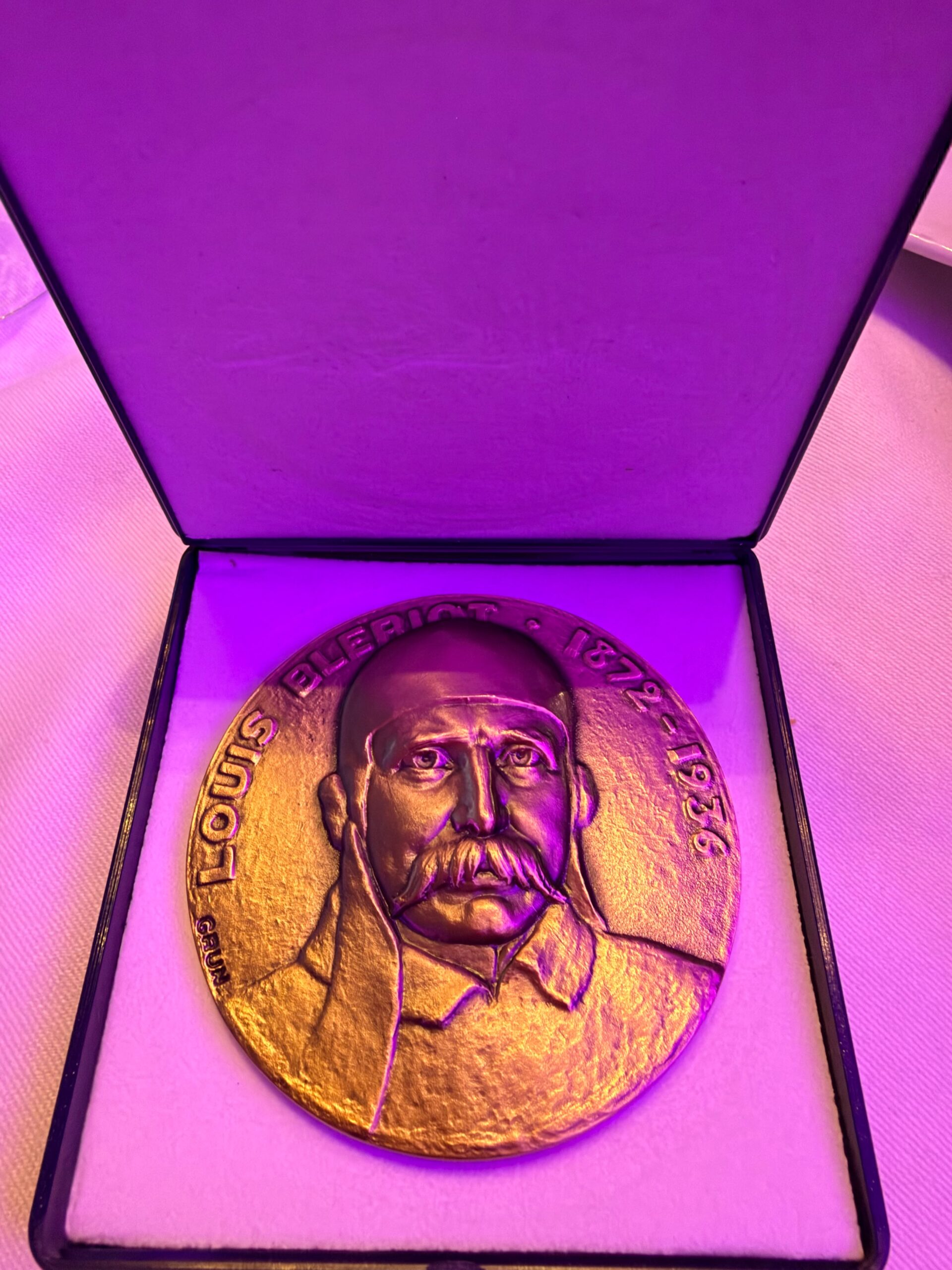
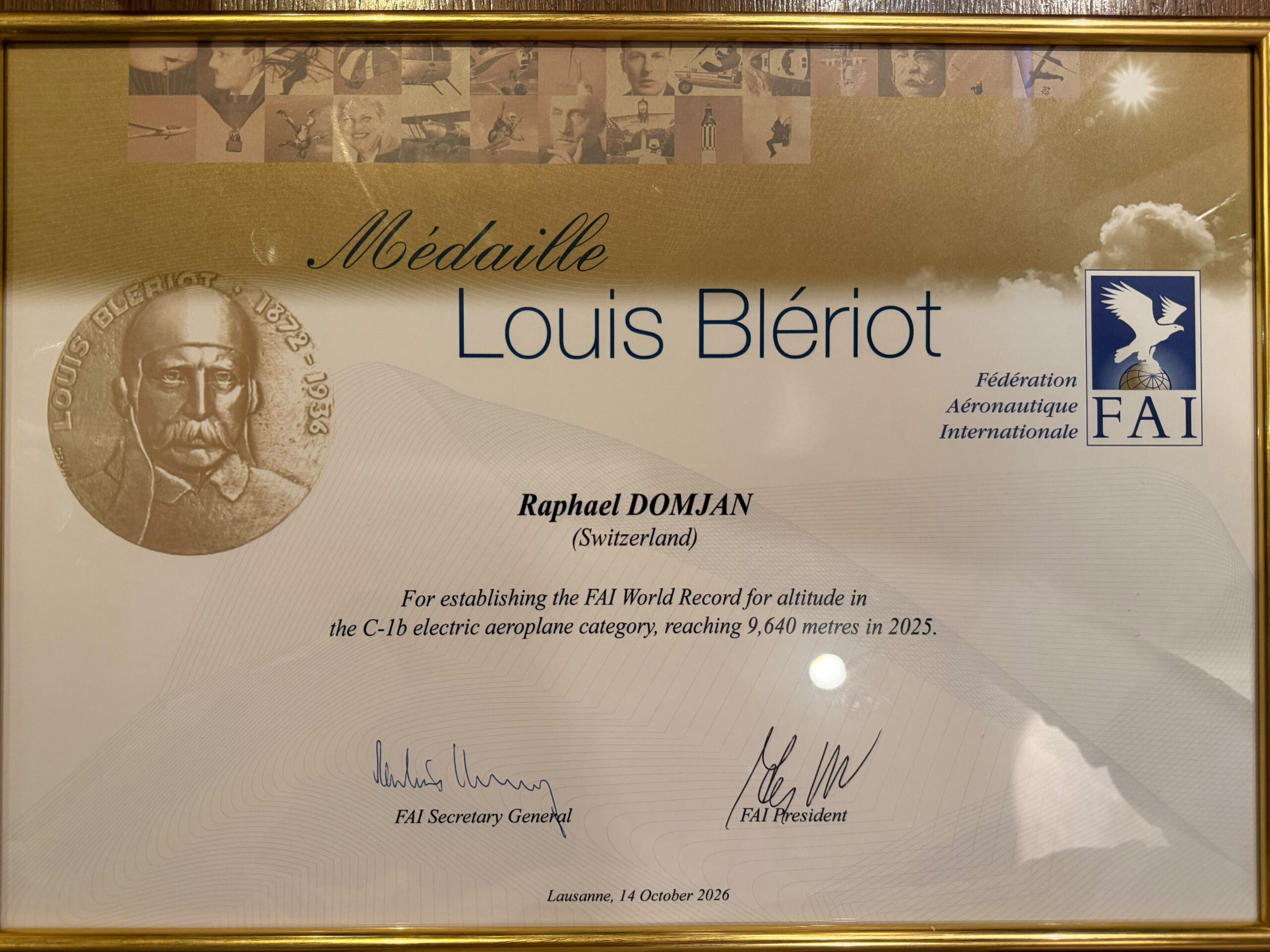
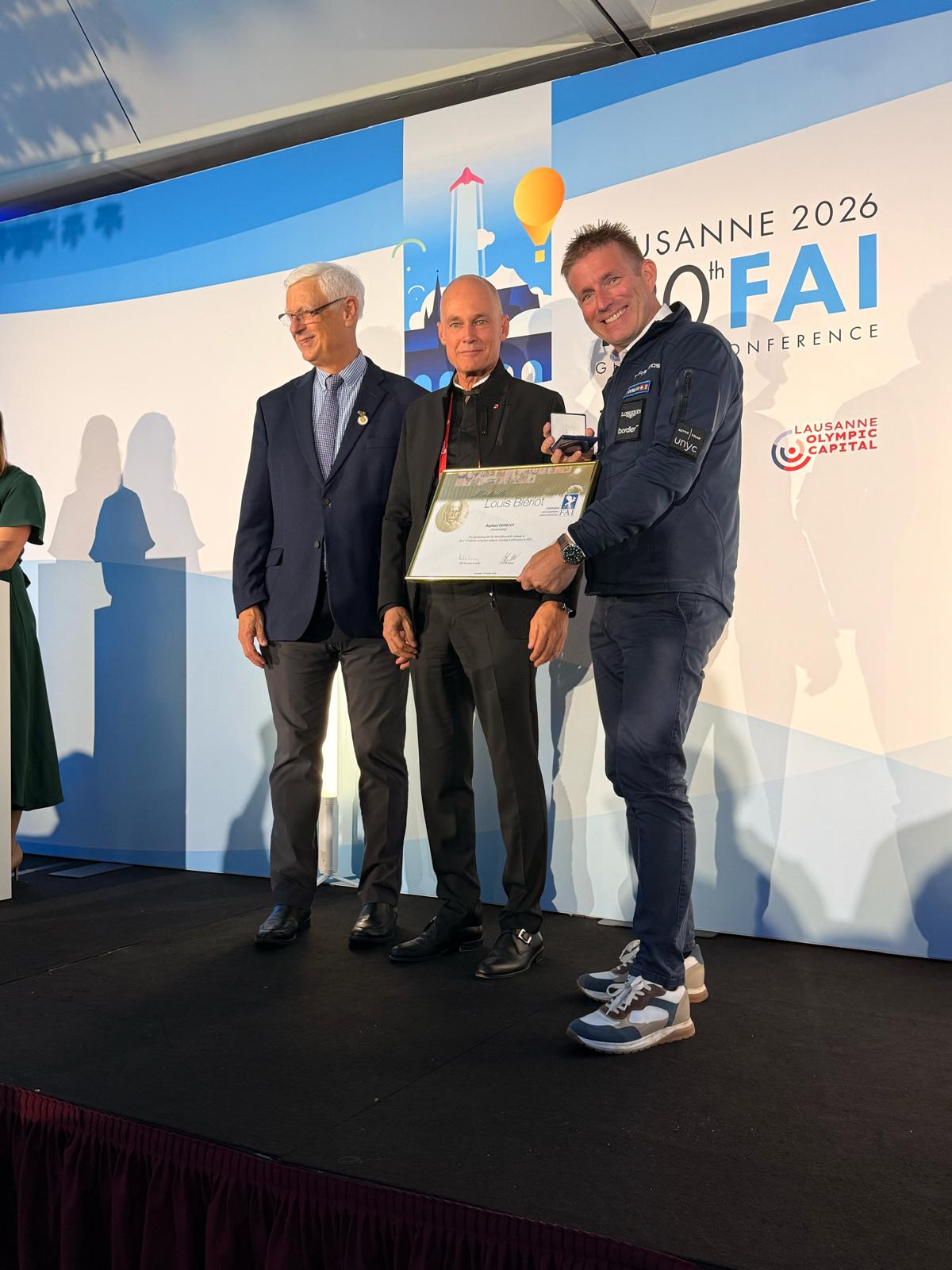
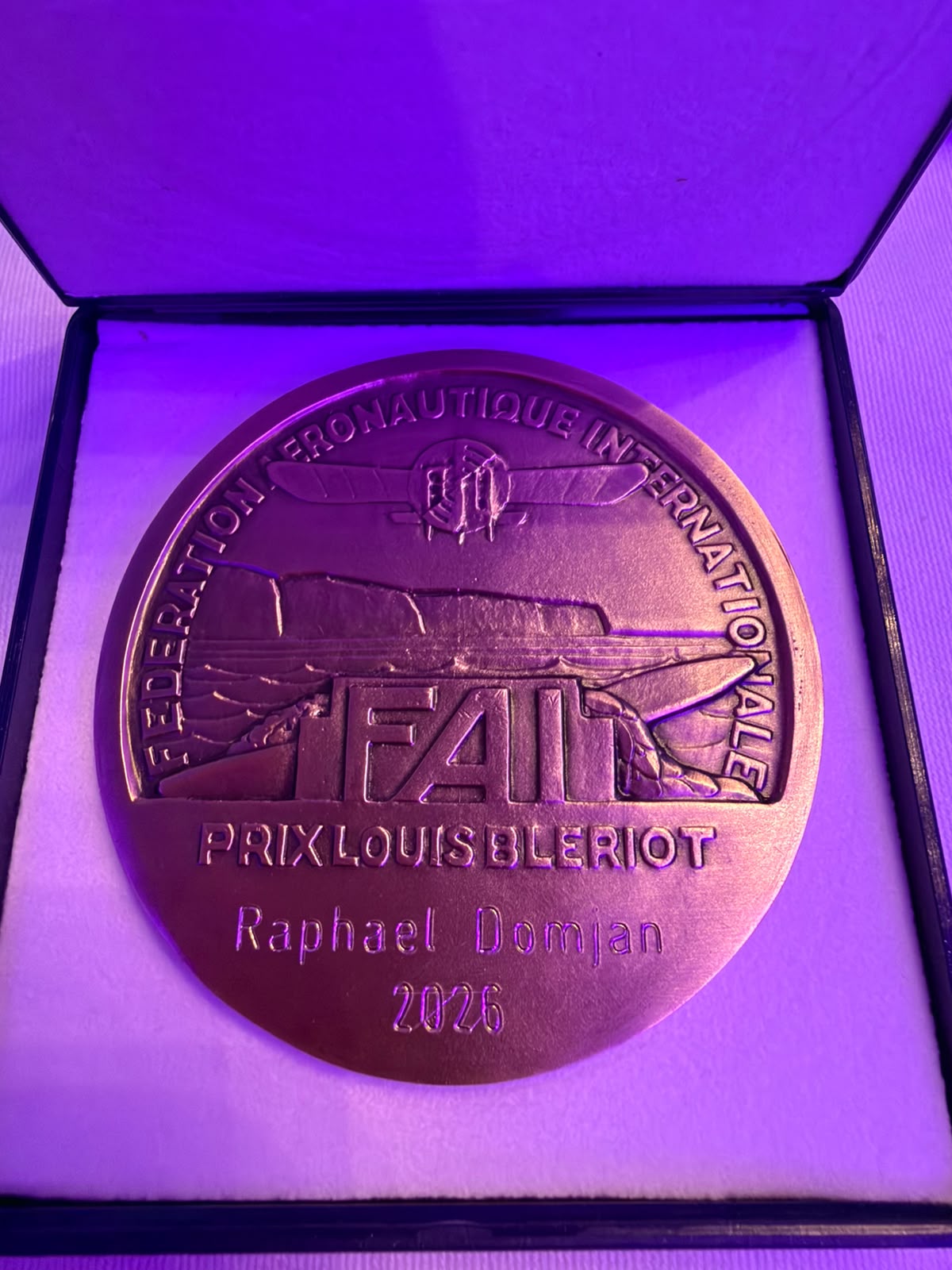
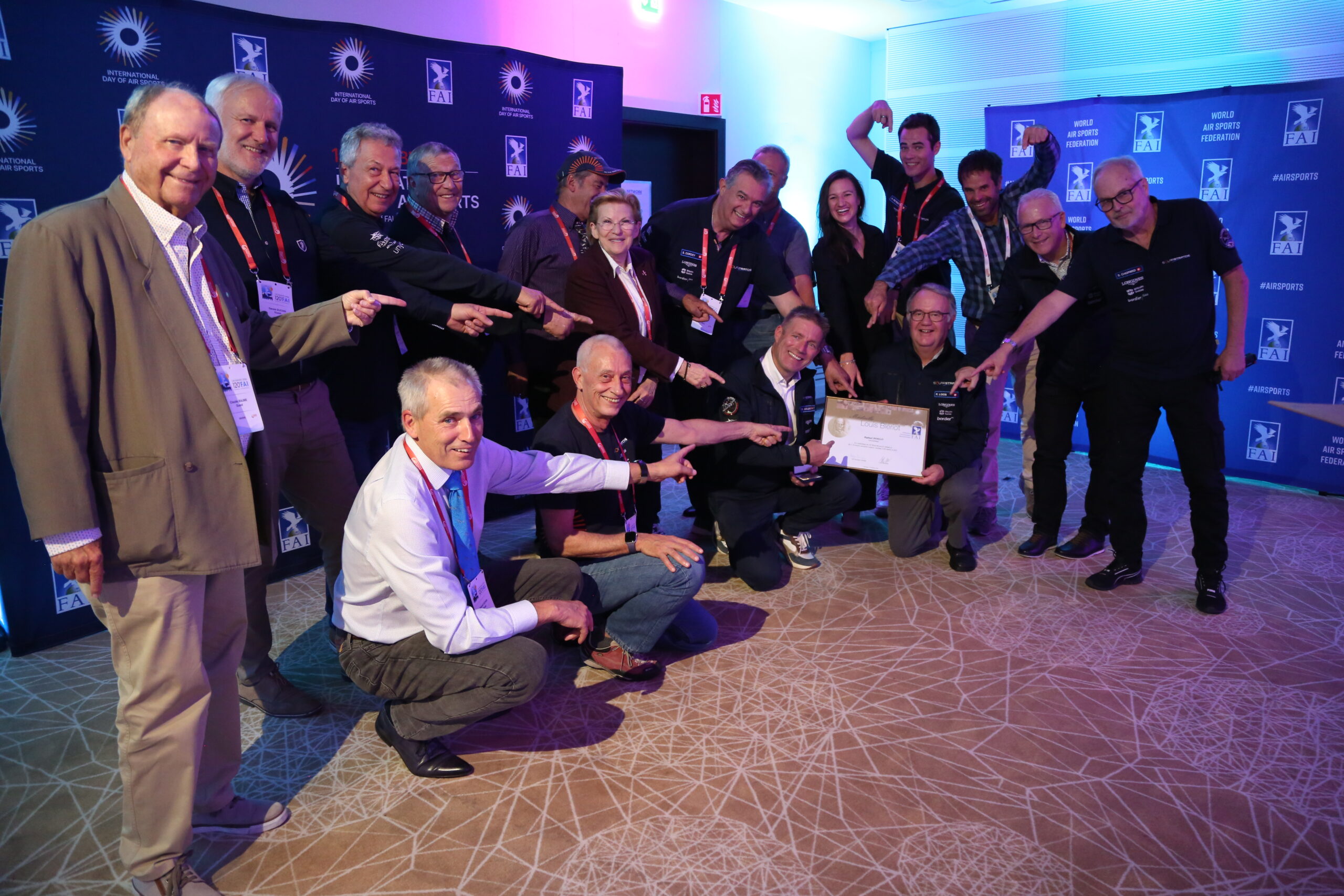
In Lausanne, the FAI presented Raphaël Domjan with the prestigious Louis Blériot Medal. Established in 1936 in honour of the French aviation pioneer, it recognises outstanding achievements in aeronautics. For the whole team, it is recognition of more than ten years of research, testing and perseverance. A huge thank-you to everyone who has been with us on this adventure from the very beginning.
Presence Switzerland renews its commitment
More good news this month: Presence Switzerland is renewing its commitment to us as an institutional partner. This valuable support strengthens the project’s national and international reach and backs our mission to fly the flag for Swiss innovation.
Premieres with Osons Causer
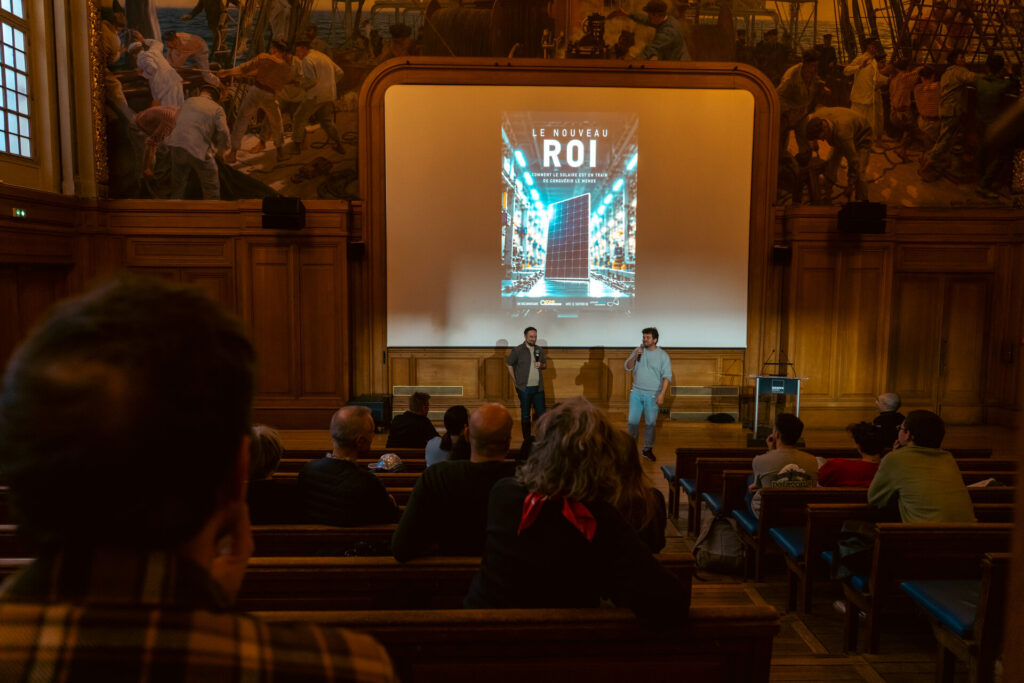
Meanwhile, the PlanetSolar Foundation unveiled its new documentary on solar energy, made in collaboration with Osons Causer, the French team well known on YouTube for making complex topics accessible to all. The film invites viewers to take a fresh look at the potential of solar power and at the renewable solutions already available today.
Two premieres marked the month of October:
- Yverdon-les-Bains, 7 October, at Explorit
- Paris, 20 October, at the Maison de l’Océan, with the support of the Oceanographic Institute of Monaco
Two cities, one sun, one shared conviction: renewable energy is not a promise for tomorrow; it is already delivering concrete solutions today. The documentary will be available on Osons Causer’s YouTube channel in early November.
Next stop: the stratosphere
These records are not an end in themselves. Our goal remains unchanged: to reach the stratosphere aboard a crewed electric and solar-powered aircraft, without a single drop of fossil fuel. Thank you to our partners, our teams, our patrons and everyone who is carrying this adventure forward with us.
9,640 metres. That’s the altitude Raphaël Domjan reached aboard SolarStratos on 12 August 2025. The Fédération Aéronautique Internationale has just ratified it: no crewed electric and solar aircraft had ever flown so high.
It took several months of meticulous checks, but the verdict is in: the FAI has officially recognised three world records set during this flight from Sion Airport.
Three records at once
- Altitude in the solar-powered aeroplanes category
- Altitude gain in the same category
- Altitude for an electric aeroplane (class C-1b)
Along the way, SolarStratos surpassed the 9,235 metres reached in 2010 by Solar Impulse, until now the benchmark for a crewed solar aircraft.
A medal steeped in history
The icing on the cake: on 14 October in Lausanne, the FAI awarded Raphaël Domjan the Louis Blériot Medal. Established in 1936 in honour of the French aviation pioneer, it recognises outstanding aeronautical achievements.
For the whole team, this is recognition of more than ten years of research, testing and perseverance. A huge thank you to everyone who has been with us on this adventure from the very beginning!
Next stop: the stratosphere
These records are not an end in themselves. Our goal remains the same: to reach the stratosphere aboard a crewed electric and solar aircraft, without a single drop of fossil fuel. The sky has never felt so close.
History in the making: the inventor of solar aviation aboard SolarStratos
The September flight campaign went as planned for the SolarStratos team, with a moment etched into the history of solar aviation: Raphaël Domjan’s flight with Fred To aboard SolarStratos. Fred To designed the very first crewed solar aircraft, and the flight came nearly 50 years after Solar One’s maiden flight.
Monday: training with the stratosphere in sight
The week began with excellent weather conditions. Raphaël Domjan completed three take-offs and, more importantly, three landings. This training was essential before the planned flight with Fred To in two-seater configuration. The technical sequence also allowed the team to maintain its operational capabilities, which is often overlooked but essential in an experimental project of this kind.

Tuesday: photo and video flight with our partner Heli Lausanne
On Tuesday, the team carried out a flight dedicated to photo and video shooting. SolarStratos flew followed by a helicopter carrying the media team. It was a delicate exercise requiring precise coordination between the two aircraft, and it took place in excellent conditions. Stunning images are on the way for our upcoming communications.
Wednesday: the weather has the final say
On Wednesday, the weather did not allow any flying. This is common with such a light aircraft, which requires stable atmospheric conditions. The team remained on standby at the hangar, ready to take off again as soon as a new weather window opened.
Thursday, September 10: a historic flight with Fred To
On Thursday morning, the conditions were perfect, with clear skies and no wind. Shortly after 8 a.m., the aircraft took off from Payerne airfield for a 30-minute two-seater flight. Raphaël Domjan was at the controls, and beside him sat Fred To. The 88-year-old architect from Hong Kong designed Solar One, the first crewed solar aircraft in history.
Solar One’s first flight took place on December 19, 1978, in Lasham, in southern England. At the controls that day was Briton David Williams, an aeronautical engineer and pilot who had teamed up with Fred To to build and fly this photovoltaic-powered prototype. Fred To himself had never flown aboard a solar aircraft. Nearly 50 years would pass before that changed. That Thursday morning in Payerne, it finally happened.
The idea of designing an aircraft powered by the sun came to him after the first oil crisis of 1973. “It was also a youthful dream,” Fred To said. That dream came true at the age of 88, alongside the man who, in his own way, is carrying the torch. “It is an honor and a privilege to be able to invite Fred To aboard SolarStratos. This pioneer is a role model for me. His perseverance, his vision and his passion have always inspired me. Thanks to him, decarbonized aviation was able to come into being,” said Raphaël Domjan.
Two generations of pioneers and two solar aircraft share one conviction: flying differently, without burning fossil fuels. It was a timeless moment, filled with emotion and history, aboard the only two-seater solar aircraft in aviation history.


What the campaign taught us
This week of flights also highlighted an important technical issue. Some of our cameras are showing signs of failure, including shaking, restarts and unstable images. Nothing serious, but the lesson is clear. These cameras endured the extreme conditions of last year’s record flights, with temperatures dropping below minus 50 degrees. Their replacement was already planned. We will switch to cameras connected directly to our telemetry system, which will simplify the whole setup and make live broadcasts more reliable.
Speed record flight postponed
We did not carry out the additional flight planned for the official speed record attempt for a CS-class solar aircraft. The federations have not yet adapted their regulations for this category, so the exercise had little purpose at this stage. We will wait for the appropriate regulatory framework before making the performance official.
In summary
This was a successful campaign. It brought a historic moment with Fred To, confirmed the team’s operational expertise and provided valuable technical lessons for the future. Thank you to all our partners, our technical teams, and everyone who follows this adventure.

Preview screening: discover “Solaire, l’énergie de demain”
To mark the release of the documentary “Solaire, l’énergie de demain” (Solar, the energy of tomorrow), made with Osons Causer and supported by the PlanetSolar Foundation, SolarStratos invites you to two exceptional preview screenings.
On the program: a screening of the documentary, followed by meetings and discussions about solar energy, innovation and solutions for building the world of tomorrow.
Two events not to be missed:
October 7, 2026 – 5:30 p.m.
EXPLORiT – Avenue des Découvertes 1, 1400 Yverdon-les-Bains
Free admission – 150 seats available, register here.
October 20, 2026 — 5:30 p.m.
Maison des Océans — 195 rue Saint-Jacques, 75005 Paris
Free admission – 150 seats available, register here.
Come along whether you are curious, a student, a teacher, a science enthusiast or simply interested in tomorrow’s solutions. Discover a different way of talking about energy and discuss the challenges that will shape our future.
Post of the month – Footage of Fred To and Raphaël Domjan’s flight
Watch the video of Fred To’s flight aboard the HB-SXA:
Heading into September for a campaign with multiple ambitions
Dear partners, friends and enthusiasts,
After a second campaign rich in firsts, the SolarStratos team is preparing for a particularly busy month of September. New flights, exceptional guests, technical developments and unprecedented prospects: here are the main highlights of what lies ahead.

A new flight campaign from September 7 to 11
The next flight campaign will take place from September 7 to 11 in Payerne, with a program structured around four main areas:
Photo and video flight
A photo and video flight will be carried out using a helicopter, allowing us to capture unprecedented images of SolarStratos in flight, while also training our teams for this type of mission alongside professional partners.
Two-seater altitude flight
A two-seater altitude flight will then be used to test the complete discharge of the batteries, in order to precisely measure the energy actually available on board. This is essential data for the aircraft’s future developments.
New attempt at a speed record
Following our unofficial performance during the previous campaign (an average of 136.6 km/h), the goal this time is to carry out this test flight at a lower altitude and in a more stable atmosphere. Indeed, we need to maintain the same altitude throughout the entire duration of the record flight.
A symbolic flight with Fred To
One of the highlights of this campaign will be welcoming aboard Fred To, the British pioneer who designed and built Solar One, the very first solar-powered aircraft in history. Together with his partner David Williams, he achieved the first autonomous flight of this aircraft on December 19, 1978, at Lasham Airfield in England.
The purpose of this flight is to allow Fred To to witness the performance differences between the very first solar aircraft in history and today’s aircraft.

Toward high-altitude flights without a pressurized suit
Alongside our operational flights, we are exploring a new technological path with LD Switzerland, a company specialized in positive-pressure oxygen systems that allow reaching very high altitudes.
The current altitude flight record without a pressurized cabin or suit was set by French pilot Georges Détré, who reached 48,698 ft (14,843 m) on August 14, 1936, aboard a Potez 506.

Thank you to everyone who continues to believe in this adventure. Every milestone achieved is thanks to you.
See you very soon,
The SolarStratos team
Understanding how SolarStratos flies on solar power, without a single drop of kerosene.
What is solar-electric aviation?
Imagine an aircraft… that flies without fuel. No kerosene, almost no noise, and energy that comes directly from the sun. This is exactly the principle behind solar-electric aviation. And no, it’s not science fiction — it’s what SolarStratos has been doing from Payerne, Switzerland, for several years already.

The basic principle in three steps
The way it works is actually quite intuitive:
1. Photovoltaic cells are integrated into the aircraft’s wings
2. They capture solar energy and convert it into electricity
3. This electricity powers an electric motor that drives the propeller
And the surplus energy produced? It’s stored in onboard batteries, to be used when sunlight is no longer enough.
Think of an electric bike: the solar panel is the dynamo. The battery is the small energy reserve. And the motor is what moves you forward. Except that here, we’re at an altitude of 10,000 metres.
The concrete case of SolarStratos
This is where it gets really interesting. SolarStratos is no ordinary aircraft. It’s a two-seater solar and electric, designed to reach the stratosphere — that layer of the atmosphere located far above the cruising altitude of an airliner. A breathtaking ambition, made possible by highly precise energy management.
Two-stage energy management
1. During the day: produce and fly
As soon as the sun shines, the solar cells integrated into the wings spring into action:
- They directly power the motor to sustain flight
- At the same time, they recharge the batteries
- The goal: produce more energy than is consumed
We fly and refuel at the same time. Like an electric car that recovers energy when braking, but in a solar version, and continuously.
2. At high altitude or without sun: the batteries take over
As the aircraft climbs, atmospheric pressure drops and conditions become harsher. When solar production is no longer sufficient, the lithium-ion batteries take over.
These are no ordinary batteries. They are:
- Ultra-lightweight: every gram counts when you’re trying to climb high
- Optimised for high altitude: they must operate under low atmospheric pressure
- Resistant to extreme cold: the aircraft operates in outside temperatures that can drop as low as -60°C
The key balance: the real challenge of SolarStratos
Flying on solar power is simple on paper. In practice, it’s an exercise in constant balance between four constraints:
Every flight is a real-time optimisation. The pilot, Raphaël Domjan, constantly manages these parameters to ensure the aircraft reaches its destination with enough energy… and without ever exceeding the limit.
It’s a bit like crossing a city in an electric car with an uncertain state of charge, at -50°C, going uphill, and with no permission to stop along the way.
Why aim for the stratosphere?
SolarStratos isn’t just trying to fly. It’s trying to climb where no one has ever gone in a manned solar-electric aircraft.
In the stratosphere:
- The air becomes so thin that it represents only a tiny fraction of the density at sea level
- Outside temperatures are freezing
- Conditions approach those found at the edge of space
- Solar radiation is at its maximum: with a much thinner atmosphere to filter the rays, the solar panels come close to their optimal efficiency
It’s a hostile environment for humans… but ideal for demonstrating the power of solar energy.
Reaching the stratosphere with a manned solar-electric aircraft means proving that this technology can operate under extreme, measurable, and reproducible conditions, far beyond low-altitude demonstrations.
A flying laboratory
SolarStratos isn’t here to replace an Airbus overnight. Its role lies elsewhere: to test, validate, and demonstrate.
Every flight generates valuable data on:
- Battery behaviour under extreme conditions
- The efficiency of solar cells at high altitude
- The thermal management of onboard systems
- The aerodynamic performance of an ultra-light aircraft
This data fuels research, inspires engineers, and paves the way for future applications in sustainable aviation.
In summary, the key takeaways
Energy source: sun + lithium-ion batteries
How it works: produce during the day, use continuously
Role of the batteries: stabilise the flight when sunlight isn’t enough
The real challenge: constant energy balance
Goal: reach the stratosphere with zero emissions
Impact: a flying laboratory for the aviation of tomorrow
SolarStratos doesn’t just fly to get from point A to point B. It flies to prove that yesterday’s impossible can become tomorrow’s standard.
Spotlight
Rediscover our spotlight on SolarStratos’s energy management!
The second flight campaign of the 2026 season concluded late last week at the Payerne runway. Over the course of a few days, the SolarStratos team achieved multiple technical validations, explored new operational capabilities, and attempted a world-first in electric solar aviation. Let’s look back at an intense sequence marked by significant milestones.
Return to Two-Seater Flight: A Global Exclusivity
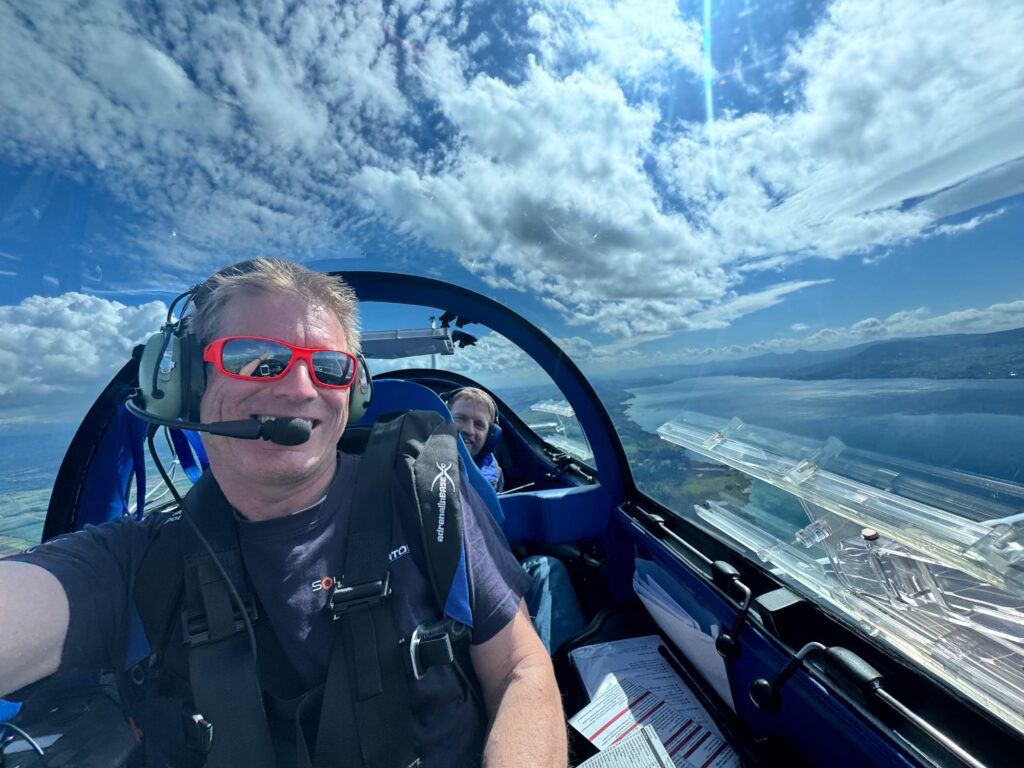
The first highlight of this campaign was the resumption of two-seater flights. A symbolic return as much as a strategic one, confirming a unique status in the landscape of solar aviation. “Today, we conducted another two-seater flight, so we’re back to flying with two people. And to this day, SolarStratos remains the only manned solar two-seater aircraft in history,” emphasizes Raphaël Domjan, pilot and founder of the project.
Beyond the symbolism, this flight pursued a precise technical objective: to verify the consistency between theoretical energy consumption and actual consumption. “The idea was to drain the batteries down to 10%. We reached 20%. Now, we’re checking the energy we theoretically used against what we will recharge to confirm that our systems accurately indicate the correct consumption,” the pilot explains.
Starlink Telemetry: A Successful Test in Flight Conditions
The next flight validated a new embedded technological component: a telemetry system capable of switching between 5G and Starlink satellite links. “We conducted in-flight tests, and it worked really well. We wanted to see if we could switch from a 5G system to Starlink and vice versa. This is an important step for the connectivity of our future high-altitude flights,” explains Raphaël Domjan.
First Attempt at a Speed Record: 136.6 km/h Average
The highlight of the campaign was an unofficial attempt at a world speed record for an electric solar aircraft. A discipline for which no official reference exists to date, but one the team wanted to explore to measure the true potential of the aircraft.
Over a 3 km out-and-back course, the aircraft reached a maximum ground speed of 154.7 km/h, which would translate to an average speed of 136.6 km/h, to be retained in case of homologation. “This is quite a success because the aircraft’s maximum speed is 140 km/h. That means we got very close to this maximum speed without ever exceeding it. We aimed for 130 km/h and achieved 136.6 km/h: that’s really good,” rejoices Raphaël Domjan.
The pilot tempers the enthusiasm, however: “It was turbulent. We’ll need to repeat the test earlier in the morning when the air is calmer. But it’s great news. I really hope to beat this record in the next campaign.”
Weighing and Closing the Campaign
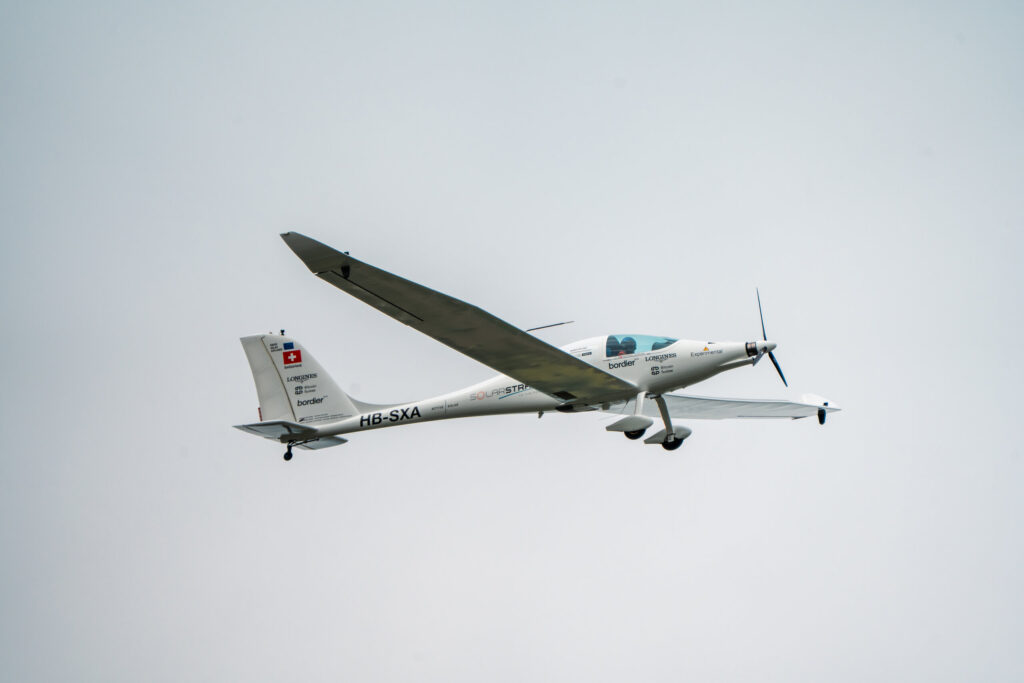
Before stowing the aircraft away, the team conducted a complete weighing of the aircraft without the batteries. A valuable data point to refine energy calculations and prepare for future technical evolutions. “We’ve closed this flight campaign. We did a weighing to find out exactly what the aircraft’s weight was without the batteries. It was a good second flight campaign.”
Onward to September
SolarStratos will now take a break for a few months. The next flights are scheduled for September, with a clear objective: to beat this speed record. A new sequence to follow closely.
A Busy Week for SolarStratos as It Takes to the Skies Again and Confirms Its Unique Status as a Solar-Powered Two-Seater Aircraft
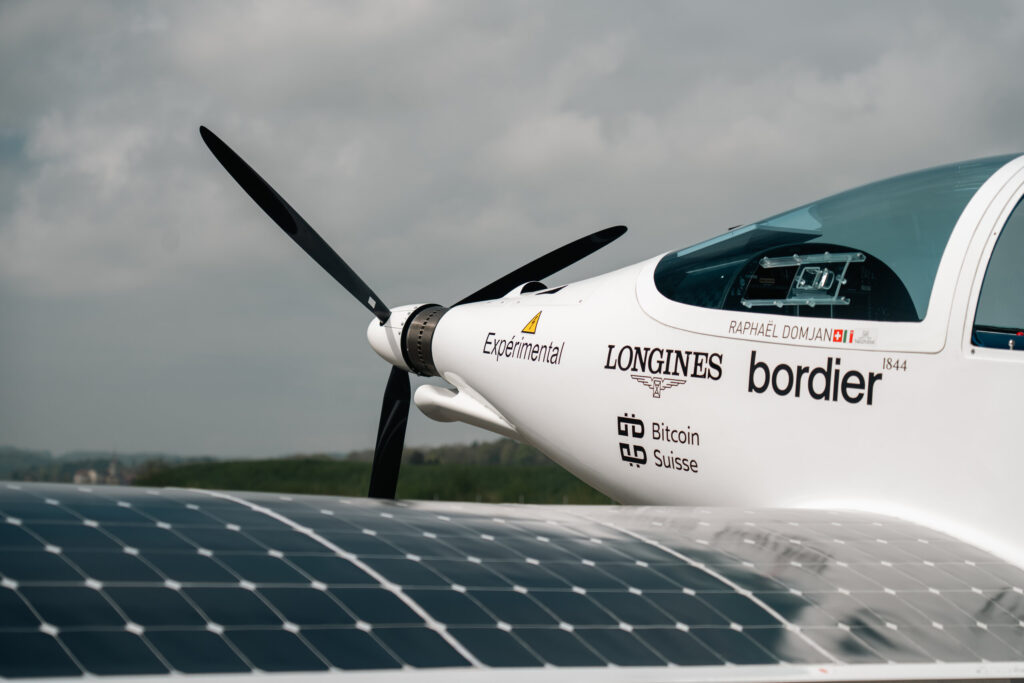
A Busy Week for SolarStratos as It Takes to the Skies Again and Confirms Its Unique Status as a Solar-Powered Two-Seater AircraftSolarStratos completed its first two-seater flight of the season yesterday. This return to the controls not only marks the beginning of its second flight campaign but also reaffirms its singular status: to date, SolarStratos remains the only manned solar-powered two-seater aircraft in history.

An Energy Validation Flight
Beyond its symbolic significance, this flight had a precise technical goal: validating the consistency between theoretical energy consumption and actual consumption. The flight plan called for reducing battery autonomy to 10%. “We ultimately landed with 20%, under perfectly controlled conditions,” the team reported. The technical teams are now comparing the theoretically consumed energy with the energy required to recharge the batteries—a crucial check to ensure that the onboard systems are displaying the correct values.
Today’s Agenda: Starlink Telemetry Test
The season promises to be busy. Today, a new flight will be dedicated to testing connected telemetry via Starlink. Initial ground tests yielded excellent results. Now, it’s time to validate these tests in flight by switching between the 5G network and the Starlink satellite link, and vice versa. This is a key step to ensure continuous connectivity during future high-altitude flights.
Thursday: Speed Record Attempt
Tomorrow, another milestone awaits: an attempt at the world speed record for a solar-powered electric aircraft. No official reference exists to date, so this will be an opportunity to set a first-ever world record in the history of manned solar aviation.
SolarStratos reaches 24,500 feet during its flight campaign: promising results, with significant improvements to come
SolarStratos’s latest flight campaign from Payerne stands as a compelling demonstration of the aircraft’s maturity. Better than expected in terms of energy performance, rich in technical and regulatory validations, it paves the way for a series of developments that could push the boundaries of the solar aircraft even further. Here is the assessment, and what lies ahead.

Efficiency above expectations
The SolarStratos team has just wrapped up another remarkable flight campaign from Payerne. The headline result: 24,500 feet reached, and this with batteries at the end of their life. Even better, actual energy consumption proved to be lower than what the SolarStratos team had anticipated, which is a very encouraging sign regarding the overall efficiency of the aircraft.
Understanding the performance: two avenues being explored
To confirm and understand this performance, two avenues are being explored. The first is to entrust the batteries to a partner engineering school in order to precisely measure their residual State of Health (SOH). The second: a new flight campaign planned before the summer, during which the aircraft will perform full discharge and recharge cycles — batteries fully depleted, then fully recharged using chargers where the charging energy will be precisely measured. The goal: to understand exactly what goes in and out of the batteries, and to validate the hypothesis of better-than-expected efficiency.
2,500 more feet in sight
On the technical side, the campaign was also an opportunity to validate a long-awaited development: the airbrake. The team is pleased with it; all that remains is to paint it. Several aerodynamic optimizations have also been identified for the coming months: landing gear fairing, work on the tail wheel drag, work under the ailerons, and integration of the GoPro cameras into the fairing. Modest in appearance, these adjustments hold significant potential: up to 10% additional efficiency for the same energy, equivalent to about 2,500 extra feet. A dedicated performance campaign will then be organized to precisely measure the gains in climb rate.

Regulatory green light: FOCA validates the inspection
Another piece of good news: FOCA has validated its regulatory inspection.
Next campaign: two-seater configuration, Starlink tests and telemetry on the agenda
The next flight campaign promises to be busy. On the agenda: first two-seater flight with Olivier de Sybourg, Director of Operations, to validate the dual controls, new Starlink link tests, telemetry tests, and assessment of the robustness of communications under degraded conditions (5G loss, Starlink loss).
THA Project
And beyond that, the project that now crystallizes the team’s ambitions: THA — Très Haute Altitude (Very High Altitude). The goal is to demonstrate that it is possible to operate in the stratosphere safely, initially without a pressurized suit, in order to precisely establish the physiological limits of very high-altitude flight. This project will be led by the SolarStratos expedition physician, Professor Patrick Schoetker.
One step at a time, but every step resolutely upward.

Post of the month – First flight of the year
Discover in pictures the first flight of the HB-SXA this year. Click on this link !
Renewed Trust from Our Partners: “We’re thrilled to be back in the air!”
Payerne, March 2026 – Great news for the SolarStratos family: our partners have renewed their trust in us, and we couldn’t ask for a better signal to kick off this new season!
Among them, Bordier & Cie is renewing its commitment by our side—a loyal and invaluable support that reflects a shared vision: one of sustainable, ambitious, and concrete innovation. To Bordier & Cie, as well as all our partners joining us for another season: thank you. Your trust is the primary energy that drives us forward.

The flight campaign begins in mid-April
At our base in Payerne, the excitement is already palpable. SolarStratos is in full preparation for its annual inspection by the Federal Office of Civil Aviation (FOCA), a mandatory step before taking to the skies again. The technical teams are hard at work, the winglets are undergoing final adjustments, and several aerodynamic and energy optimizations are being finalized.
The goal is clear: to be ready for takeoff by mid-April for a 2026 season that promises to be historic.

SolarStratos on TV!
Catch us on RTS (Swiss Radio and Television) on April 1st at 10:20 PM! And no, it’s not a joke. Discover the next chapter of the SolarStratos adventure in “À la poursuite du rêve” Part 2, a documentary by Stéphane Chopard. Also available for streaming on Play RTS from March 25th to May 1st.
Post of the Month – How Do We Start SolarStratos?
Did you know a solar plane doesn’t take off like a conventional aircraft? No kerosene, no deafening roar—just the power of the sun and a meticulous procedure.
Check out the Reel on Instagram!/a>
Spotlight
To explore and truly understand the stakes, the extraordinary challenge, and the behind-the-scenes of SolarStratos, watch our Spotlight series:


Watch the Spotlight episodes on Instagram: Spotlight #1 / Spotlight #2 / Spotlight #3 / Spotlight #4
Partners, followers, and enthusiasts—see you in the skies very soon!
The SolarStratos Team
Back to Flight: The 2026 Season in Sight
At the bustling SolarStratos base in Payerne, the electric solar aircraft is undergoing meticulous preparation ahead of its annual inspection by the Federal Office of Civil Aviation (FOCA). Every surface, every component, every detail is checked, adjusted and optimized to ensure the aircraft meets regulatory requirements in the best possible conditions. A crucial milestone — and above all, the real starting point of an ambitious new season.
Beyond this regulatory step, the technical teams are fully mobilized around the final adjustments and optimizations of the aircraft. The winglets are receiving targeted interventions, while several improvements are underway to further enhance aerodynamic and energy performance. The goal: turning every detail into a decisive advantage and making ground preparation the first lever for in‑flight performance.
“Each season is a new step toward the stratosphere. We’re not just trying to fly — we want to demonstrate that solar‑electric aviation can push established limits,” says Raphaël Domjan, Pilot and CEO of SolarStratos.
“Flying is never an end in itself. Every takeoff is a technological validation, every hour in the air a tangible proof of reliability, energy efficiency and operational mastery. We advance step by step, with rigor and humility, but with an unwavering ambition: to expand the realm of what’s possible.
Solar‑electric aviation should no longer be seen as an experimental promise. It is a reality in the making. Our role is to prove that it can be high‑performing, measurable, reproducible, and capable of reaching goals previously reserved for conventional propulsion systems.
Pushing the limits means flying faster, flying higher, gathering more data — but also inspiring a new generation of engineers, pilots and decision‑makers. Each season brings us closer to a new standard for sustainable aviation.”
Once the FOCA inspection is completed, the aircraft will take to the skies again with three major objectives:


Introducing a Public Figure to Solar‑Electric Flight
A flight that is both symbolic and strategic, designed as much for demonstration as for conviction. Beyond the aerial experience, the goal is to publicly embody the concrete potential of solar‑electric flight. Bringing a public figure on board gives innovation a voice and a face, creating a narrative capable of transcending technical circles and opening dialogue with the general public, policymakers and economic stakeholders.
This flight will be a signal: that solar‑electric aviation is credible, controlled, and ready to write a new chapter. A strong way to assert that sustainable aviation is no longer a theoretical projection, but a trajectory already underway.

Setting the First Official Speed Record in a Solar‑Electric Aircraft
A record which, to this day, has never been officially established. The field is wide open — there is no existing benchmark. The ambition is clear: to set a first world record and write a new line in the history of manned solar‑electric aviation. The attempt will be carried out in accordance with international standards, using measurement and certification systems approved by the Fédération Aéronautique Internationale (FAI), the only authority able to validate such a performance.
Beyond symbolism, this is a defining milestone for the entire sector: providing an official, indisputable and globally recognized measurement of the real capabilities of solar‑electric propulsion. Setting this record is not only about flying faster — it is about establishing a framework, a reference, a proof. And opening a new chapter in the history of sustainable aviation.

A High‑Altitude Scientific Flight
Departing from Payerne, in perfectly stable atmospheric conditions, the aircraft will perform a dedicated flight to collect high‑precision data. This information will be crucial for upcoming technological evolution.
Beyond performance itself, this entire program reflects a strong conviction: the future of aviation is being built today — in the hangars, on the runways, and through the rigor of regulatory inspections.

SolarStratos est la nouvelle aventure de Raphal compose dÕune quipe internationale. Elle a pour ambition de rejoindre la stratosphre avec un avion solaire. Il sÕagit de dmontrer que grce lÕnergie du soleil, il est possible dÕaller plus haut quÕun avion fonctionnant aux nergies conventionnelles. Ce vol sera celui de tous les dangers, quip dÕune combinaison spatiale, Raphal sÕapprochera des limites techniques et humaines pour un tel vol. Une fois l-haut, dans la stratosphre, Raphal pourra observer la courbure de la terre !
Une fois ce vol ralis, Raphal et son quipe envisagent dÕorganiser des vols commerciaux pour des passagers dans la stratosphre.


