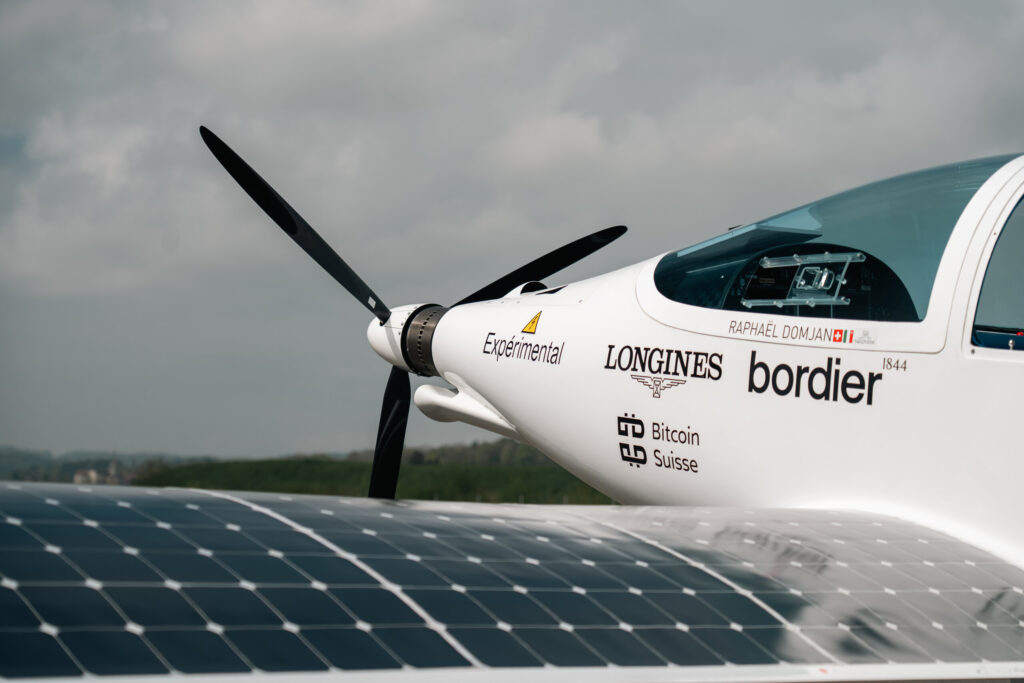

The second flight campaign of the 2026 season concluded late last week at the Payerne runway. Over the course of a few days, the SolarStratos team achieved multiple technical validations, explored new operational capabilities, and attempted a world-first in electric solar aviation. Let’s look back at an intense sequence marked by significant milestones.
Return to Two-Seater Flight: A Global Exclusivity
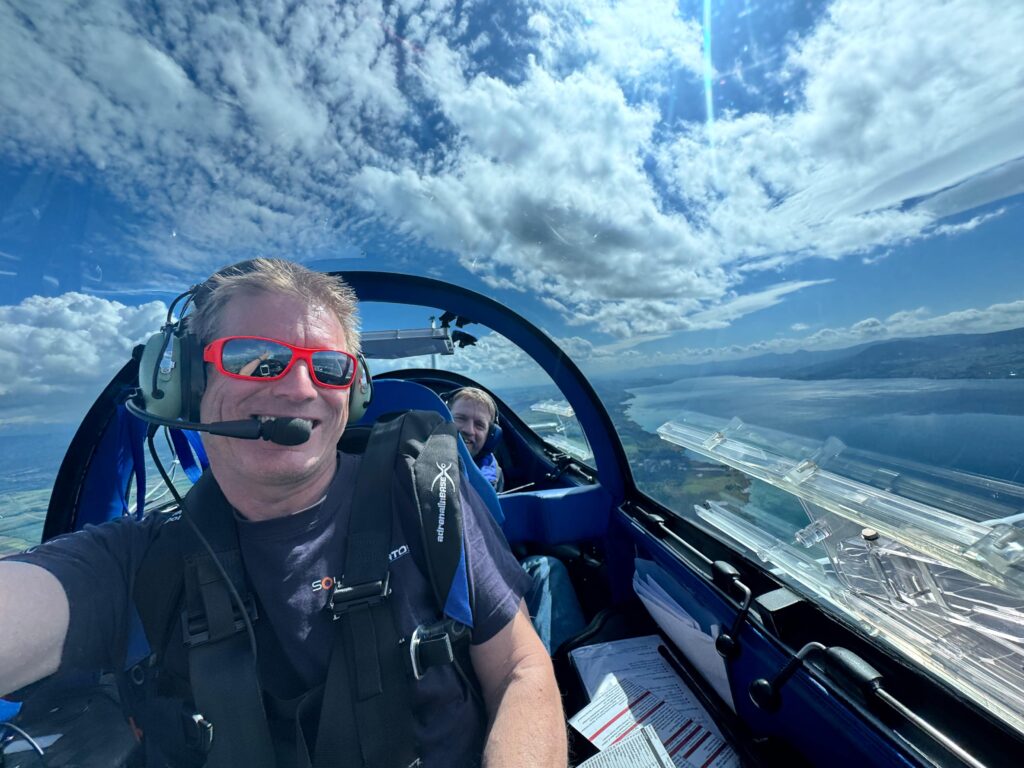
The first highlight of this campaign was the resumption of two-seater flights. A symbolic return as much as a strategic one, confirming a unique status in the landscape of solar aviation. “Today, we conducted another two-seater flight, so we’re back to flying with two people. And to this day, SolarStratos remains the only manned solar two-seater aircraft in history,” emphasizes Raphaël Domjan, pilot and founder of the project.
Beyond the symbolism, this flight pursued a precise technical objective: to verify the consistency between theoretical energy consumption and actual consumption. “The idea was to drain the batteries down to 10%. We reached 20%. Now, we’re checking the energy we theoretically used against what we will recharge to confirm that our systems accurately indicate the correct consumption,” the pilot explains.
Starlink Telemetry: A Successful Test in Flight Conditions
The next flight validated a new embedded technological component: a telemetry system capable of switching between 5G and Starlink satellite links. “We conducted in-flight tests, and it worked really well. We wanted to see if we could switch from a 5G system to Starlink and vice versa. This is an important step for the connectivity of our future high-altitude flights,” explains Raphaël Domjan.
First Attempt at a Speed Record: 136.6 km/h Average
The highlight of the campaign was an unofficial attempt at a world speed record for an electric solar aircraft. A discipline for which no official reference exists to date, but one the team wanted to explore to measure the true potential of the aircraft.
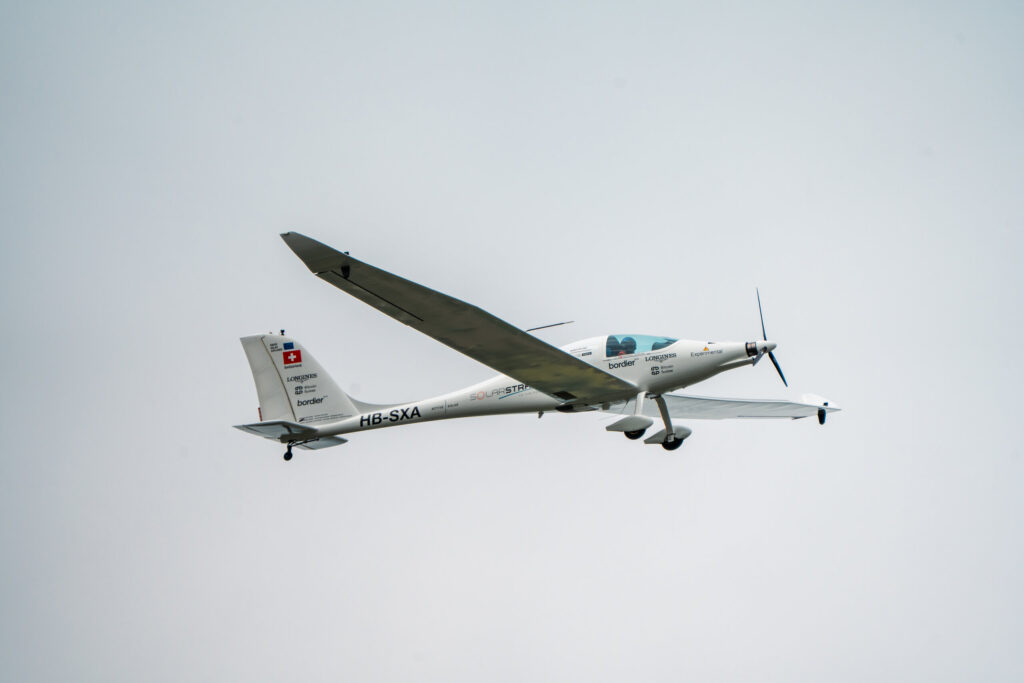
Over a 3 km out-and-back course, the aircraft reached a maximum ground speed of 154.7 km/h, which would translate to an average speed of 136.6 km/h, to be retained in case of homologation. “This is quite a success because the aircraft’s maximum speed is 140 km/h. That means we got very close to this maximum speed without ever exceeding it. We aimed for 130 km/h and achieved 136.6 km/h: that’s really good,” rejoices Raphaël Domjan.
The pilot tempers the enthusiasm, however: “It was turbulent. We’ll need to repeat the test earlier in the morning when the air is calmer. But it’s great news. I really hope to beat this record in the next campaign.”
Weighing and Closing the Campaign
Before stowing the aircraft away, the team conducted a complete weighing of the aircraft without the batteries. A valuable data point to refine energy calculations and prepare for future technical evolutions. “We’ve closed this flight campaign. We did a weighing to find out exactly what the aircraft’s weight was without the batteries. It was a good second flight campaign.”
Onward to September
SolarStratos will now take a break for a few months. The next flights are scheduled for September, with a clear objective: to beat this speed record. A new sequence to follow closely.